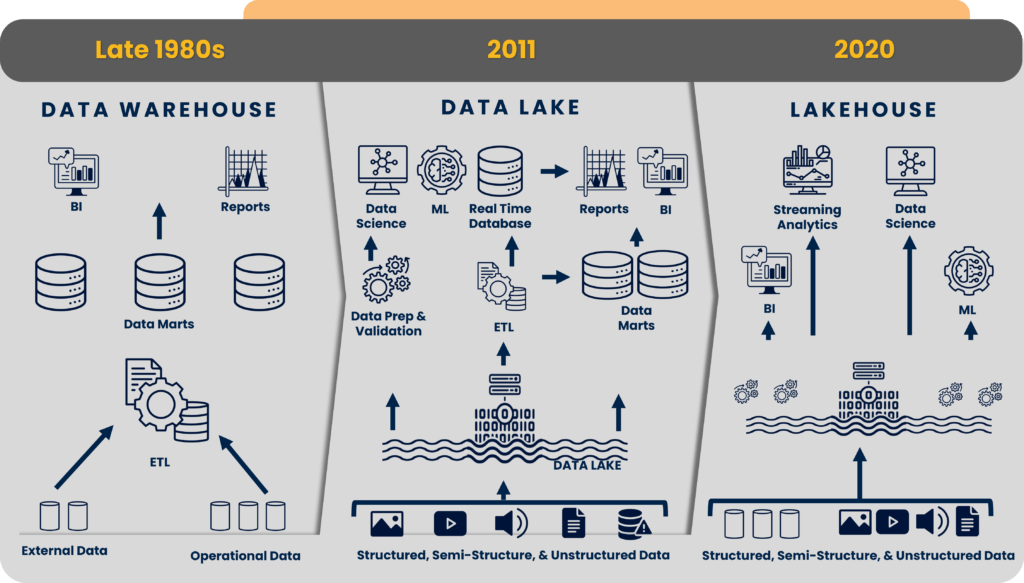
In today's data-driven world, organisations are inundated with information from diverse sources — CRM systems, financial platforms, IoT devices, and more. To turn this raw data into actionable insights, businesses rely on modern data warehouses (MDWs): centralised repositories designed for scalable, secure, and high-performance analytics.
🔮 Emerging Trends in Data Warehousing
1. Cloud-First Architectures
Cloud platforms like Snowflake, Azure Synapse, and Google BigQuery dominate the modern landscape. They offer elastic scalability, pay-as-you-go pricing, and seamless integration with other cloud services.
2. Real-Time Analytics
Traditional batch processing is giving way to real-time data ingestion and analysis. Technologies like Apache Kafka and stream processing frameworks enable instant insights for time-sensitive decisions.
3. Data Lakehouse Models
Hybrid architectures that combine the flexibility of data lakes with the structure of warehouses — known as lakehouses — are gaining traction. These support both structured and semi-structured data, ideal for machine learning and BI workloads.
4. DataOps and Automation
DataOps practices bring CI/CD principles to data engineering. Automated testing, version control, and pipeline orchestration improve reliability and reduce deployment time.
5. AI and ML Integration
Modern warehouses increasingly support AI workloads. From predictive analytics to anomaly detection, platforms now offer native support for training and deploying models within the data ecosystem.
✅ Best Practices for Building a Modern Data Warehouse
1. Start with Business Requirements
Before designing schemas or choosing tools, align with stakeholders to define KPIs, reporting needs, and data sources. This ensures the warehouse supports real-world decision-making.
2. Design for Scalability
Use modular architecture and decoupled components. Adopt star or snowflake schemas based on query complexity and performance needs.
3. Implement Robust Data Governance
Define clear policies for data ownership, lineage, and access control. Use metadata management tools to maintain transparency and compliance.
4. Optimise ETL/ELT Pipelines
Choose between ETL and ELT based on data volume and latency requirements. Use tools like Boomi, dbt, or Apache Airflow for orchestration and monitoring.
5. Monitor and Tune Performance
Regularly audit query performance, storage usage, and pipeline health. Use automated alerts and dashboards to catch issues early.
6. Secure Your Data
Implement encryption at rest and in transit, role-based access control, and audit logging. Security should be baked into every layer of the architecture.